Grant Writing
The Grant Writing Community of Practice(CoP) brings together Early Career Researchers, Experienced Researchers, and Grant writing professionals among others to share best practices on writing and winning grants. Feel free to join the movement.

Mentorship and academic networks are imperative in grant writing. Mentors are most often the supervisor/PI within the research group and help align proposal to the funder\'s and institute\'s priorities. Furthermore, mentors, being highly experienced and having advanced networks, often help with…
This is quite an interesting conversation, and I agree with colleagues’ insights. My understanding is that it allows PIs to critically refine their proposals and strategically identify potential stumbling blocks in study implementation. This process may actually strengthen the proposal…

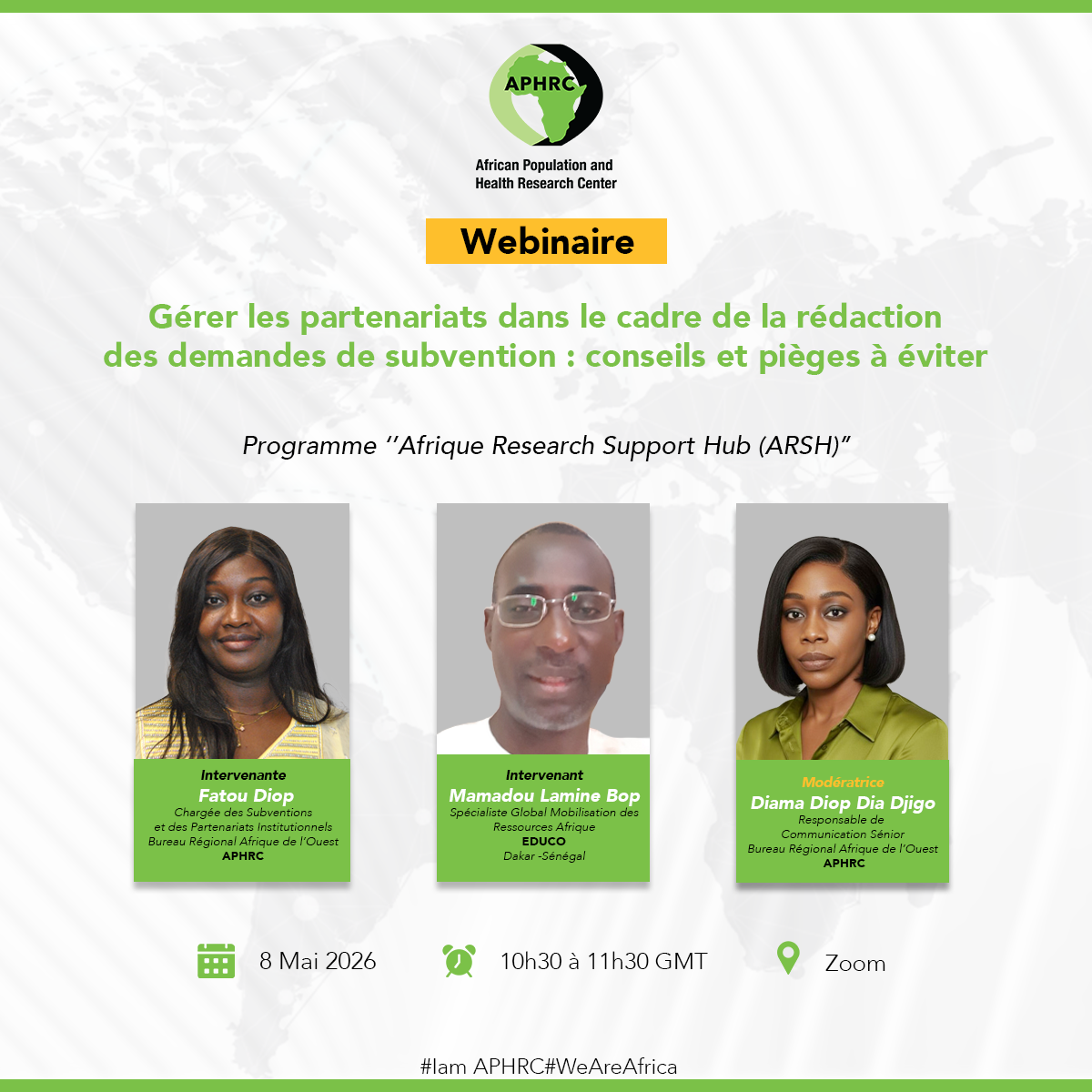
Invitation au Webinaire : Gérer les partenariats pour les demandes de subventionL\'African Population and Health Research Center (APHRC) a le plaisir de vous inviter à son prochain webinaire organisé dans le cadre du Programme \"Afrique Research Support Hub (ARSH)\".Rejoignez-nous pour…
Excellent insight, effective grant writing treats risk not as something to hide, but as evidence of strategic thinking. The strongest proposals show that uncertainty is a natural part of ambitious research and that the applicant has the intellectual discipline to…
Absolutely, risk management is really about balancing optimism with preparedness. “Hope for the best, but prepare for the worst” captures the mindset perfectly: stay positive about outcomes while proactively identifying, assessing, and mitigating potential challenges so surprises don’t derail progress.
Addressing risk in a grant proposal is less about minimizing uncertainty and more about demonstrating intellectual control over it. Reviewers generally expect risk; what they evaluate is how well you anticipate, contextualize, and manage it. A strong approach balances transparency…
A good parting shot for risk management is \"hope for the best but prepare for the worst\"
Yes—research in environmental science, including water pollution control strategies, is often highly fundable, especially when it addresses urgent public health, sustainability, climate resilience, or policy priorities. Funding eligibility usually depends less on the topic alone and more on how well…
Excellent approach. Your strategy reflects a strong balance between strategic scanning and practical alignment. Tracking emerging priorities through funder newsletters, sector analyses, and past awards is an effective way to identify where real funding opportunities exist rather than developing ideas…
Researchers should address potential risks in a grant proposal with honesty, strategic planning, and confidence—showing reviewers that challenges have been anticipated and can be effectively managed. Best practices for discussing risks without weakening feasibility: 1. Acknowledge Risks Transparently Demonstrate realism…
Peer review is a structured and objective evaluation of a proposal conducted by a multidisciplinary team. It provides an opportunity for independent reviewers to assess the proposal with a fresh perspective, helping to identify weaknesses, gaps, or misalignments that authors often deeply immersed in their work may overlook. Read more
Ilham wrote:How can mentorship and academic networks be leveraged to improve the quality of grant proposals?Mentorship and academic networks improve grant proposals by providing expert guidance, constructive feedback, and collaboration opportunities. Mentors help refine ideas and align them with funder…

How can mentorship and academic networks be leveraged to improve the quality of grant proposals?

How should researchers discuss potential risks in a grant proposal without undermining confidence in the project’s feasibility?<div>
This is one of the questions a researcher should not overlook risk potential in the grant proposal stage because you don’t avoid risk, it should be frame to a manageable and anticipated. The Reviewers are expecting risks on a strong proposal that is compelling. What they’re evaluating is whether you are a thoughtful, prepared researcher. The following keys should be considered in risks management, e.g.:
Ø By acknowledging Risks Briefly and Clearly understandable
Ø By pair Every Risk with a Mitigation Strategy
Ø By emphasizing Preparedness, Not Uncertainty
Ø By categorizing Risks (Optional but Powerful in term of Methodological risks (e.g., data quality issues), Operational risks (e.g., access to participants), Technical risks (e.g., platform failure for digital repositories), and Ethical risks (e.g., data privacy concerns)
Ø By showing Feasibility Through Track Record or Design
Ø Avoid Overloading with Too Many Risks
Ø Use a Risk Table
Ø End with a Confidence Statement
</div>
🖼️ Images (1)