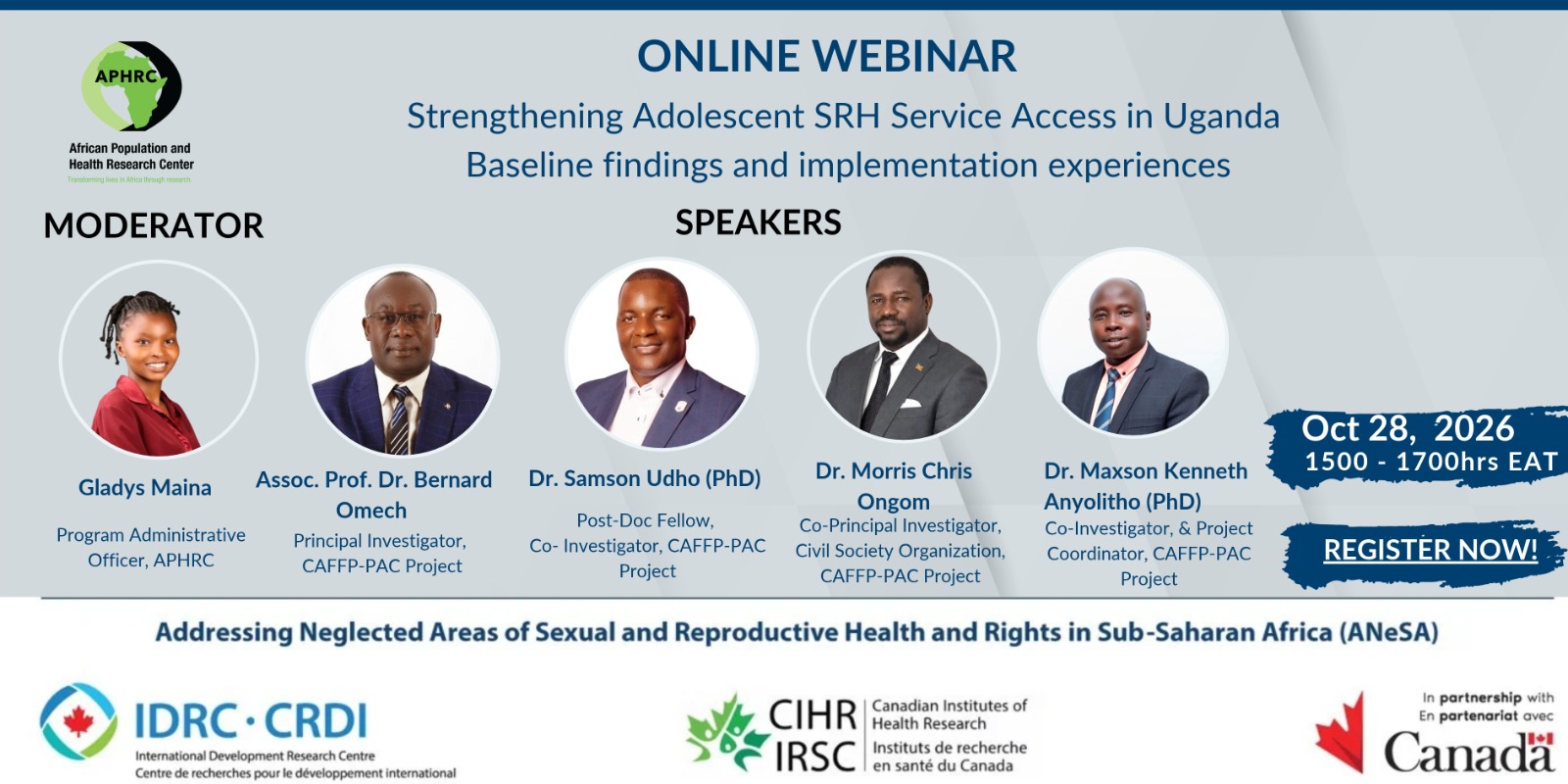
ONLINE WEBINAR: Strengthening Adolescent SRH Service Access in Uganda - Baseline findings and implementation experiences

Dear Colleagues,
We are pleased to invite you to a virtual evidence dissemination and learning session where the CAFFP-PAC Project—Enhancing Integration of Adolescent Family Planning and Post-Abortion Care in Northern Uganda: A Citizen Science, Gender-Transformative Approach—will share new evidence, insights, and practical lessons on strengthening adolescents' access to SRH services from refugee and host communities.
What we’ll explore:
- Understanding the CAFFP-PAC Project
- Key baseline findings on adolescents’ SRH needs, experiences, barriers to care, and opportunities for improvement
- Project co-design, intervention development, and implementation
- Stakeholder roles, community participation, and opportunities for collaboration to improve access to adolescent-friendly care
 Date: Wednesday, October 28, 2026
 Time: 1500–1700 hrs (EAT)
 Venue: Virtual
Join the conversation by registering through this link:https://us02web.zoom.us/webinar/register/WN_pLoHmN0iSwab7I4uUq0WHQ

Thank you Rhoda for sharing this important invitation.
@Charles Bawate, thank you for registering, and I'm glad the citizen science and gender transformative framing resonated. You've picked out exactly the thread I hope the session pulls on: the gap between disaggregated baseline data and the lived experiences behind it. Service statistics can tell us who is and isn't accessing care, but not why, and certainly not how invisible power and social norms shape a girl's decision to seek FP or PAC services. That's where the qualitative, adolescent-led part of the work matters most. Your point about moving from diagnosis to actionable recommendations with the people who can implement change is the test of whether this session is useful or just interesting so I'd love your voice in the discussion on Oct 28th, particularly on what "adolescent friendly" actually looks like when you're designing with adolescents rather than for them. See you there.
🖼️ Images (1)