Impact Evaluation
This community of practice aims at harnessing the power of data for population and health research and advancing impact and program evaluation to generate evidence for informed decision-making across our programs.

Hello Professor Charles, welcome to the community! It is wonderful to have you join us from Malawi with your strong expertise in economics and your passion for impact evaluation. Your interest in applying both quantitative and qualitative methods to assess…
Thank you for sharing this excellent summary of May’s Impact Evaluation Month. The series covered a rich and highly relevant range of topics—from experimental and quasi-experimental methods to realist evaluation, qualitative approaches, and the critical issues of generalizability, transportability, and…
Excellent point. Strong local ownership is often the bridge between evidence and effective implementation. Even when external policies are backed by rigorous evidence, successful adaptation depends on how well they are understood, accepted, and shaped by local stakeholders. Engaging communities,…
Excellent questions. Policy makers often must balance rigorous evidence from elsewhere with local relevance. Strong external evidence can show what works, but local context—such as culture, systems, resources, and implementation capacity—matters greatly. Less rigorous local evidence may be more context-specific…
A great and timely topic. Adapting relevant external policies to local contexts is indeed a valuable approach, but it often presents crucial implementation challenges. The most effective way to transfer evidence or policies across contexts is by ensuring strong local ownership by closely engaging all stakeholders who are directly impacted by the policy. Such inclusive engagement not only facilitates smoother acceptance but also enhances successful implementation and scale-up.
Should policy makers rely on less rigorous evidence from a local context or more rigorous evidence from elsewhere? Should a new experiment always be done locally before a program is scaled up? Must an identical program or policy be replicated a specific number of times before it is scaled up? How can we transport evidence from one context to the others?
welcome Charles. In this forum you have an opportunity to network and collaborate with fellow proffesional on IE. keep engaging
May was our Impact evaluation month where we conducted a series of brown bags. These were the topic that were discussed:
1.Strategies, New Initiatives at DSE, and Experimental Methods
- The importance of impact evaluation andStrategies and initiatives with DSE
-Experimental methods: The power and pitfalls of conducting RCTs in Africa
2. Realist Evaluation & Qualitative Methods Introduction to realist evaluation-Integrating qualitative methods into impact evaluation
3. Quasi-Experimental Methods-Overview of key methods: Current state of the art of PSM, DiD, RDD, and IVM methods
4. Generalizability, transportability, and transferability of evidence
If you have any question, clarification or follow up regarding above feel free to post here and someone will respond to you.
I am called Pacifique DUSENGIMA ,
I Work for WHOLEHEALTH CENTER , Rwanda
My research interest is in public health, mental health

I am Charles Blessings Jumbe, a Professor of Economics from the Lilongwe University of Malawi and Natural Resources, Malawi. I have the passion on conducting impact evaluations of development interventions and policies using quantitative and qualitative methods.
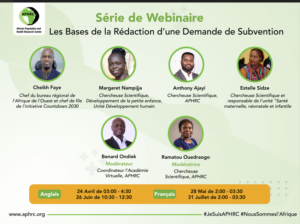
Kindly feel free to ask questions and also post any events that can enrich the platform.
Greetings,
I am Steve Omollo from Kenya, my research interest is in data governance framework for effective impact evaluation. Currently an intern at APHRC.
Nelson Kalema is a Physician and Research Scientist with training in Epidemiology and Implementation Science. His interests span from providing patient clinical care, conducting clinical research, implementation science and impact evaluations mostly for persons at risk of or living with HIV/TB (PLHIV/TB). He is enthusiastic about prevention, early TB detection, treatment among PLHIV/TB, and utilizing routinely collected HIV-TB care data to identify and close gaps in the uptake of evidence-based interventions/practices in real-world settings.